The Craft of AI
A new way to work: autonomous agent teams
From steering one Claude agent to running a coordinated team of 11 from Slack.
By Luke Lin · · 7 min read
Friday of my first week running the GTM team, I opened the weekly brief and noticed something magical. My strategic brief had merged context and learnings from all of my GTM activities that week, without me putting in extra effort to manage files or data.
One item traced back to a sales-call recap from Tuesday. An insight came from market research on our analytics wedge from Wednesday. A use case came straight from a digital twin. They all came together to give me an updated view of the market, our market, and what that meant for our GTM strategy.
Pre AI, this would have taken a few hours to pull together this much information and pull it together for a strategic brief - the equivalent of a marketing analyst’s job.
Using Claude, half of this would work. The other half would be semi-updated skills and lost MD files from their buggy harness, shared across Claude Cowork and Claude Code.
I finally feel the magic that was promised to me with AI agents. In graduating from manually steering a Claude agent to managing a team of coordinated, autonomous agents from slack, I’ve seen a sharp increase in my productivity: call prep that used to take me 2-3 hours of window-switching between Claude Cowork and Code now happens in the background, alongside a real jump in depth of research and accumulated knowledge from a human/agent loop.
This is how I got there.
Where I started: steering agents in Claude
I spent the last 3 months codifying skill files in Claude, enamored with the idea that I could create skills to do an assortment of jobs. If I could write down the how of each job I wanted, load it into an agent, and set a couple of schedules, I figured the work would start building on itself. Write the procedure once, reuse it forever, and watch the output compound.
That instinct was right, and skills were the right place to start. Skills (or any other MD file) turned a generic reasoning LLM into a highly skilled worker by providing a steerable knowledge layer.
But I was running all of this in Claude Cowork, which only ran locally. This meant that anytime I didn’t have my laptop open, I couldn’t do my work.
Later, I tried using Claude Code for this work through their desktop client. That promised me on-demand workers.
But Claude was buggy in a way that built up frustration. Skills would silently fail to update, so I’d be running an old version of a procedure I’d already fixed. Reference files went missing. Artifacts I’d generated last week were just gone this week.
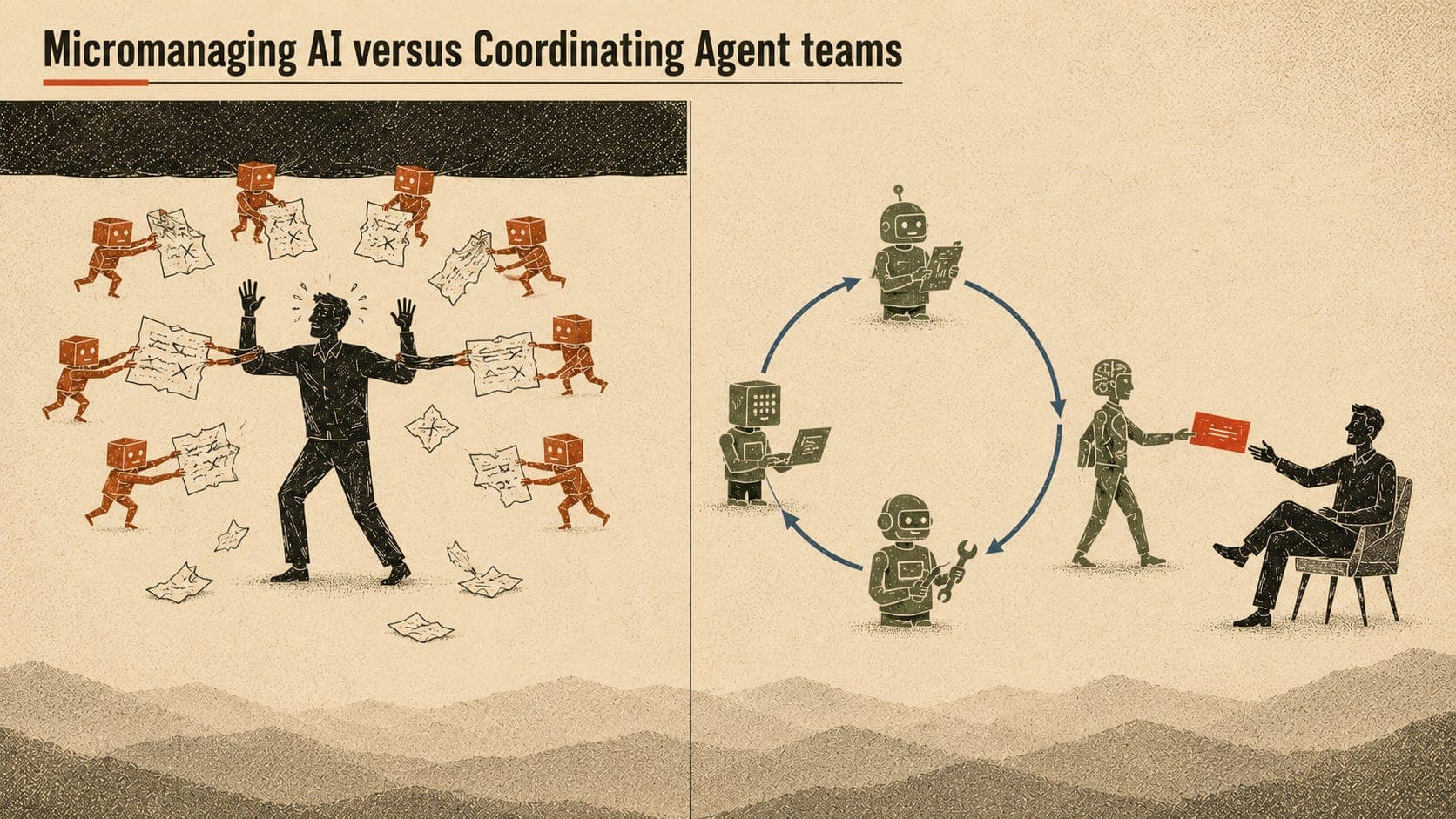
I had codified the how. Nothing was building on top of it. Every session started at zero, where I had to manually steer the agent, constantly expending effort to fix issues mid-stream and actively drive concurrent terminal or desktop threads.
The single agent was leverage, real leverage, but it wasn’t compounding. The highest-value agent behaviors - the continuous learning and persistent context - these were the ones a stop-start local model couldn’t support.
Up until this point, using Claude, even on schedules, was always a stop-start model that I had to drive. The limitation was my ability to steer something in the moment, including not just the agent itself but all the context and schedules and skills under it.
A new way to work: agent teams in chat
The moment it clicked was a sales call I was prepping for.
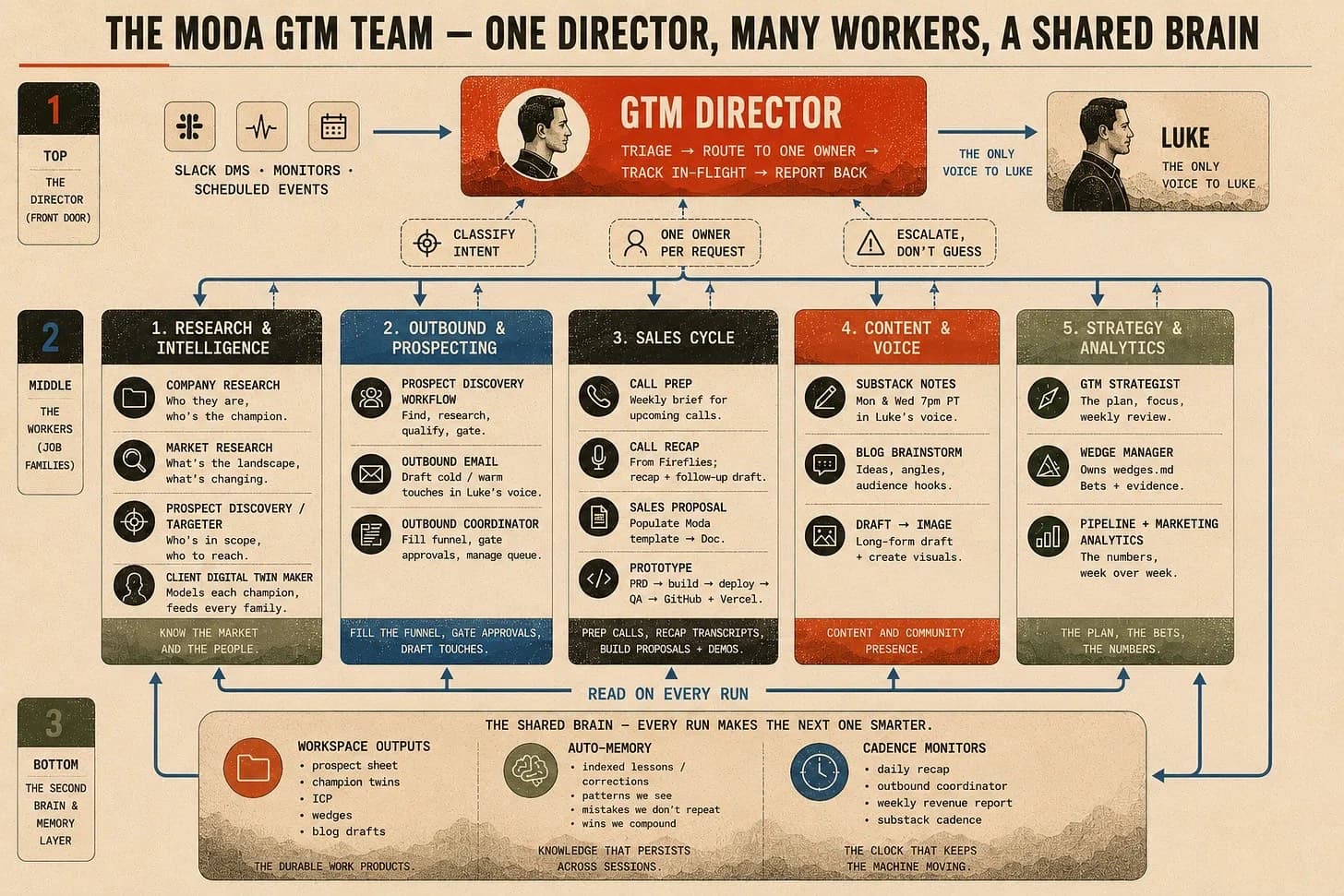
I went to my #moda-gtm channel in slack, and told my agent team about the call. My GTM director immediately dispatched 3 workers.
One built a company dossier.
One built a digital twin of my champion.
And one took the prospect’s incoming requirements doc and shipped a working prototype, deployed on Vercel, in the prospect’s own branding. A tailored version of exactly what they’d asked for.
The champion left the call saying the prototype was notable, and that we’d nailed his needs.
And I was able to steer all of that from slack. This is a glimpse of what we were promised with AI and agents.
A single steered agent, pointed at one folder, could not have produced that output. I’ve tried. It took 2-3 hours, window switching between Claude Cowork and Code. A standing team working off shared context was able to handle the work, and our sales process benefitted from it.
How the agent team comes together
Graduating from one steered agent to a standing team is a change in kind, not degree. Call this the Agent Team shift. Bringing this new magic to life requires a lot of moving pieces.
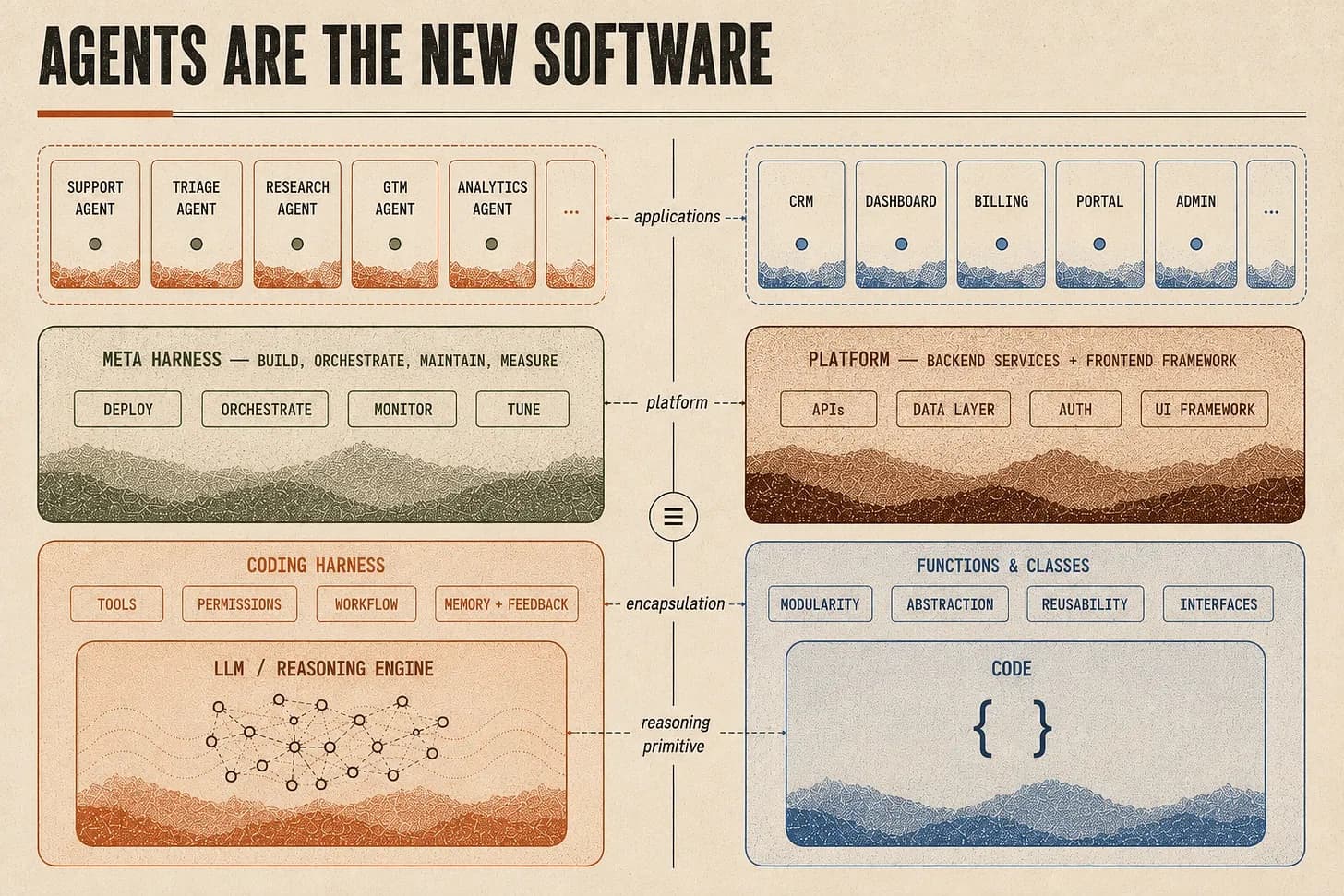
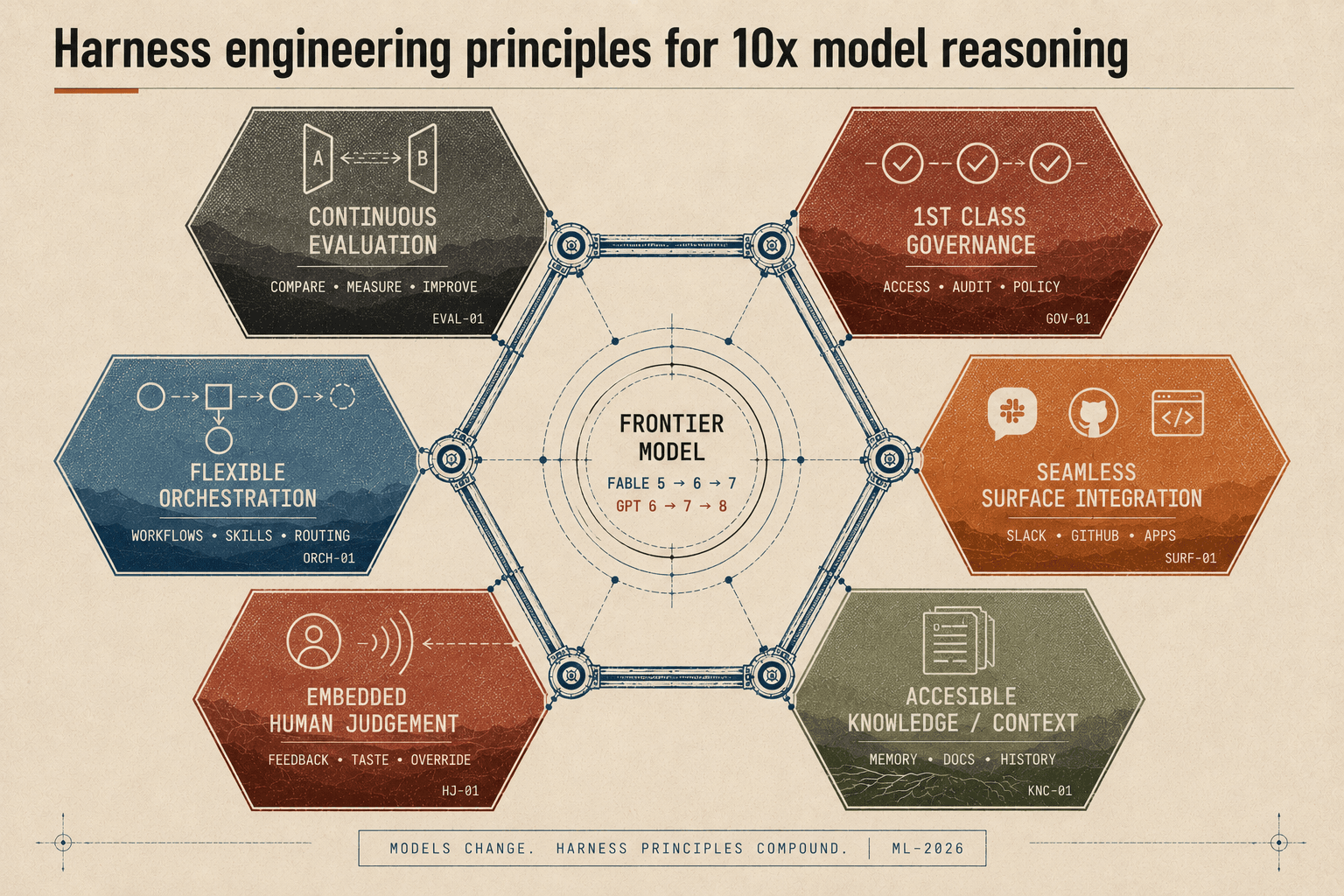
Foundationally, I needed a harness - I used our internally built harness (Bobi) that runs off real-time events and lets me easily build different agent topologies. Beyond that, a few things stood out that enabled a new level of work.
- The Agent Team: instead of one defined agent with access to a variety of skill files that I would direct, I defined a team of 11 different agents in a larger GTM team. I have a director agent that coordinates work and deliveries, 5 different job families, and each agent can easily talk to each other via CLI. This enables complex workflows like the one from above, where I have the director dispatch a series of jobs across multiple agents, who can pass context to deliver something.
- Second Brain and Memory: Next to my agent team, I have my second brain, where every raw document and output artifact is stored. This gives me a central repository of accumulating knowledge that I can draw from. I also have every turn of every conversation stored as episodic memory. Automatic jobs run to synthesize these into learnings on my preferences and semantic understandings so that my entire agent team works better today than yesterday.
- Flexible scheduling and orchestration: My agent team runs a strategic brief every Sunday. It also checks things like substack every other day for me on a cron. It also reacts to emails and meetings on demand for me, helping me run recaps in near real time. And I can talk to it, asking it to run deep research for me at any point, or help me think through my GTM strategy and motions, all drawing from the shared second brain and memory.
- Slack access: I underestimated the impact of doing this work on slack until I witnessed it firsthand. With this setup, I have a dedicated channel for my GTM discussion and activities. Each of my inquires and needs becomes its own dedicated thread, where I can go deep in discussion with my agent team. In Claude, I had to manually select projects, which were routed to different folders and contexts. I often forgot to do this, or it would take 2-3 clicks, which meant it was enough friction for me to not do it.
- Model flexibility: My blog drafting workflow begins with researching lots of topics across the internet, coming up with a spine, writing the first draft (followed by me cleaning everything up), and then creating an image that pairs with my writing. I’ve orchestrated my agent team to use Sonnet for internet research for speed and cost, then Opus for the reasoning and thinking for the draft, and then ChatGPT to create the image.
Where an autonomous team helps, and where it doesn’t
Having an agent team at your fingertips can be game changing, but only for the right use cases.
A standing team helps for repeatable high-value tasks and quick discussions: GTM, research, the kind of work where context accrues and the next task genuinely benefits from the last.
For high-volume, latency-sensitive, or strictly sequential single-thread work, a single steered agent still wins. For example, if I’m building a UI where I need to make lots of adjustments or go back and forth on design, I’ll still open my terminal to do that work.
The best way to think of it is a standing team that can handle time consuming, lower precision tasks and a place to offload all your thoughts, learnings, and context.
The future of work, managing fleets of agents
If you’re already steering one agent and you can feel the ceiling, you’re not imagining it, and you’re not early to the frontier. The largest companies are converging on the same shape you’d build for yourself: a workspace, a harness, skills, and a shared brain.
Most mature AI teams I’ve come across are building a version of this for their enterprises. And most mature AI practitioners already have a version of this for their personal use at work.
When we take this one step further, we’re on the cusp of a real workplace revolution. Instead of simple search across enterprise surfaces and one-off half-built agents that can update salesforce records, we can have well designed agent teams that perform reliable work.
Imagine a support team that catches a customer’s bug report the instant it lands, reproduces it in a live sandbox, traces it to the offending commit, and hands an engineering agent a scoped, tested PR before the ticket’s an hour old.
Imagine every one of those fixes, tickets, and calls landing in the same shared second brain, so the pattern your best engineer would catch in month six gets caught by the whole team in week two.
That’s the agent team shift: not a faster you, but a compounding one. I went from steering one agent to running a team of 11. What would you build if yours never started back at zero?
Frequently asked questions
- What is an autonomous agent team?
- An autonomous agent team is a standing group of coordinated AI agents — for example, a director agent that dispatches work across specialized worker agents — that runs off real-time events, schedules, and chat messages instead of being manually steered one session at a time. The agents share context, pass work to each other, and draw on a common second brain and memory, so the team's output compounds instead of starting every session at zero.
- How is an agent team different from steering a single agent?
- A single steered agent is real leverage, but it is a stop-start model: the human has to drive every session, and the highest-value behaviors — continuous learning and persistent context — don't survive between runs. A standing agent team is a change in kind, not degree: a director coordinates multiple agents that work in the background, share context, and accumulate knowledge, so work that took 2-3 hours of window-switching happens without the human in the loop.
- When does an autonomous agent team help, and when doesn't it?
- A standing team helps for repeatable high-value tasks and quick discussions — GTM, research, the kind of work where context accrues and the next task genuinely benefits from the last. For high-volume, latency-sensitive, or strictly sequential single-thread work, like iterating back and forth on a UI design, a single steered agent still wins.
- What do you need to run an autonomous agent team?
- Foundationally, a harness that runs off real-time events and supports different agent topologies. On top of that: a defined team of agents with a director that coordinates work, a second brain that stores every raw document and output artifact plus episodic memory synthesized into learnings, flexible scheduling and orchestration (crons, event reactions, on-demand requests), chat access such as a dedicated Slack channel, and model flexibility to match each step of a workflow to the right model.
KEEP READING